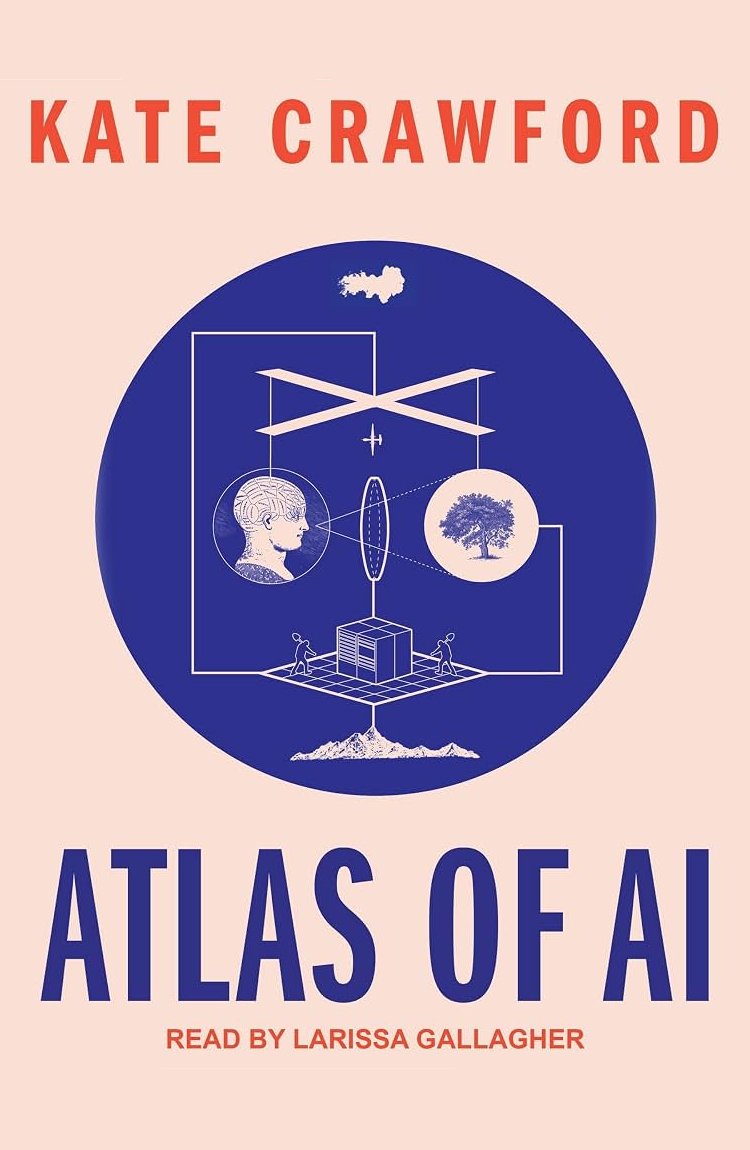
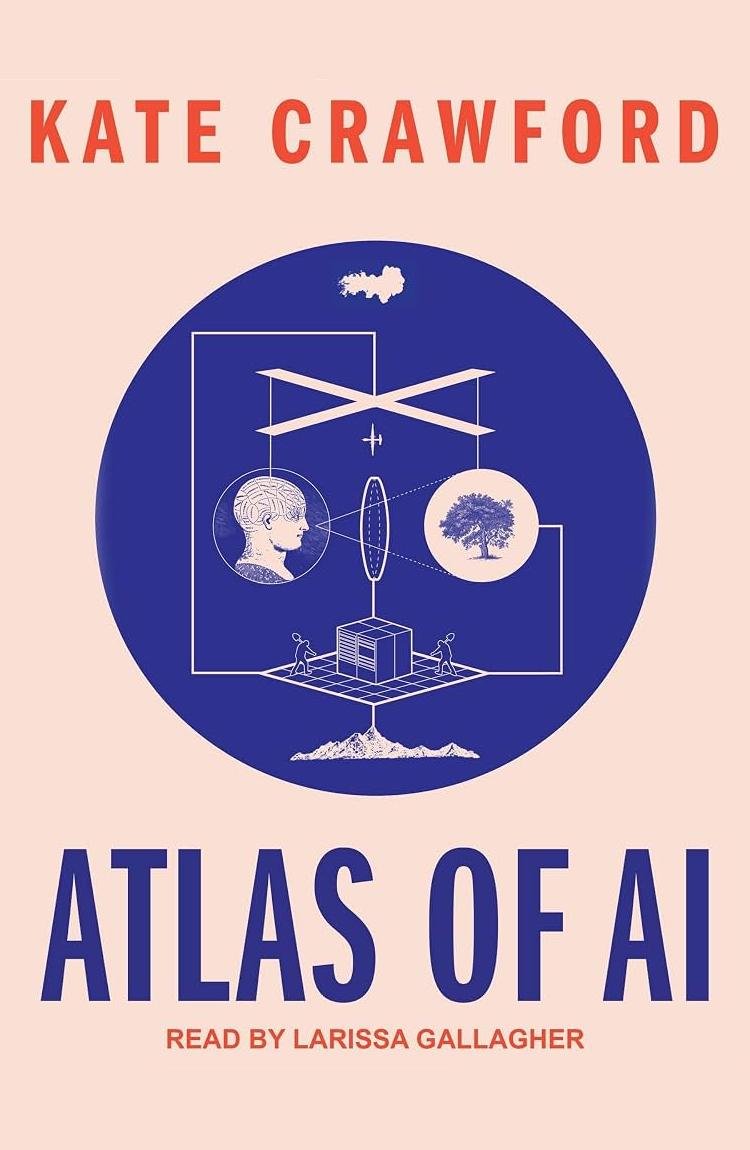
In Atlas of AI, Kate Crawford refuses the premise that artificial intelligence is made of mathematics. Written as an atlas rather than an argument, the book travels from the lithium flats of Nevada to rare-earth tailings ponds in Inner Mongolia, from warehouse floors governed by the stopwatch to the archives from which training data was quietly taken, and arrives at a claim that reframes the entire field: AI is an extractive industry, and always has been.
Crawford's contention is that the two words in the name are both misleading. These systems are not artificial — they are built from minerals, water, electricity, logistics networks and an enormous quantity of underpaid human labour — and they are not intelligent in any sense that survives contact with what they actually do. What they are, she argues, is a registry of power: a technology that arrives already carrying the interests, categories and blind spots of the institutions that construct it.
The Core Concept: The Extractive Stack
The book's method is as much the argument as its conclusions:
- Neither Artificial Nor Intelligent (the thesis): Every model rests on a physical and human substrate that the language of the field is designed to render invisible. Once the mine, the data centre, the labelling contract and the scraped archive are restored to view, AI stops resembling a neutral technique awaiting good governance and starts resembling an industry with a supply chain, an environmental footprint and a labour record.
- The Atlas as Method (the framework): Crawford borrows the atlas form precisely because it permits shifts of scale. A single volume can hold the planetary and the individual — a salt flat and a single worker's productivity score — and the juxtaposition does analytical work that neither view achieves alone. The result is a map of a system, not a verdict on a device.
Key Insights and Structure
The chapters proceed as strata. Earth follows the material extraction that scaled computation requires. Labor documents the human work that the word automation conceals, from crowdworkers assembling training data by the fraction of a cent to warehouse staff managed by systems that treat the body as a component. Data examines the archives themselves — photographs, mugshots and personal records gathered from people who never consented and frequently never learned — and the casual assumption that anything reachable is thereby available.
Classification is the book's philosophical centre. Crawford reads the taxonomies embedded in benchmark datasets as political acts with a long and disreputable lineage, tracing the impulse to sort human beings into fixed categories back through the measuring instruments of the nineteenth century. Affect turns to emotion recognition and the contested theory of universal facial expressions on which a commercial sector has been built. State recovers the military and intelligence provenance of technologies now marketed as consumer infrastructure, and follows their return to policing, border enforcement and surveillance.
Crawford writes as a researcher who has spent years inside the institutions she describes, and the book is grounded in fieldwork and archival research rather than commentary — a continuation of the mapping impulse behind her earlier collaboration with Vladan Joler, Anatomy of an AI System, which traced a single voice assistant back through every process required to produce it.
Why It Is Essential Reading
Atlas of AI is the strongest available counterweight to a discourse conducted entirely in the future tense. Where forecasting literature asks what these systems might one day do to us, Crawford documents what they are already doing, to whom, and at whose expense — and demonstrates that the costs are neither hypothetical nor evenly distributed. The frame has since become standard equipment for journalists, regulators and researchers examining the industry's material conditions.
Final Verdict
Rigorous, unhurried and quietly devastating, Atlas of AI performs a simple and difficult operation: it makes the invisible parts of the machine visible again. Crawford declines both the marketing language of inevitability and the theatre of existential risk, and insists instead on the harder question of who is paying, who is deciding, and who was never asked.